When Detroit’s first winter cold snap hits, it can bring a host of hidden furnace problems. Although your system may run fine in milder weather, your furnace has to work harder when temperatures drop, which can reveal underlying issues. We’ll explore common signs you need furnace repair in Detroit, MI, and how C & C Heating & Air Conditioning can help you stay comfortable through frosty Detroit winters.
Why Furnace Repair in Detroit, MI, Matters Before Winter
After your system sits unused all summer, you may find common problems like a dirty flame sensor, a cracked igniter, or dirty air filters. Scheduling annual furnace maintenance and repair in the fall with our HVAC maintenance program helps catch these issues before they turn into furnace emergencies in the dead of winter.
Your Furnace Is Blowing Cold or Lukewarm Air
If your furnace is blowing cold air or lukewarm air, first check your thermostat and make sure it’s set to the correct temperature. If the issue persists, it may be due to a problem with the ignition or the heat exchanger. These issues mean the furnace will keep blowing air, but the air won’t be warm. Ignition and heat exchanger problems require professional furnace repairs by a Detroit HVAC repair technician.
Strange Furnace Noises Are Getting Louder
When your furnace is running properly, it might make a low humming noise when it turns on, but it shouldn’t be loud enough to disrupt your daily life. If you notice strange furnace noises like banging, bumping, humming, whining, or grinding, these can indicate mechanical issues like a slipped belt. If left unfixed, this can damage other furnace components and may even pose a fire hazard.
Your Furnace Keeps Turning On and Off
Your furnace should run for about 10 to 15 minutes before turning off for a similar amount of time. If your furnace keeps turning on and off, this is called furnace short cycling. Short cycling prevents your furnace from properly heating your home to the desired temperature and increases wear and tear, which can shorten the system’s overall lifespan.
Some Rooms Stay Colder Than Others
If some rooms in your home are colder than others, a ductwork issue is most often to blame. A section of your ductwork leading to that room may be blocked or leaky, preventing hot air from reaching the room. Duct cleaning and sealing can improve furnace efficiency and home comfort.
Airflow From Your Vents Feels Weak
If airflow from just one vent in your home feels weak, it may be a ductwork problem. However, consistently weak airflow from furnace vents is likely due to a furnace issue such as a failing blower motor or clogged air filters. A licensed HVAC technician can inspect your furnace to determine the root cause.
Unusual Furnace Odors Need Attention
A healthy furnace shouldn’t smell anything other than a mild odor the first time it’s turned on for the season as dust burns off. If you smell a musty, old-socks odor, it is typically caused by mold or mildew growth inside your furnace or ductwork. A burning furnace smell indicates a fire hazard, while a rotten eggs odor means a gas leak. Get unusual furnace odors inspected promptly, as some can indicate a serious health and furnace safety hazard.
Your Furnace Flame Looks Different Than Normal
Your furnace flame should burn blue when running properly, indicating efficient combustion and that all materials are being used. A pilot light that glows yellow or orange indicates incomplete combustion, which can pose a carbon monoxide risk. Always have a carbon monoxide detector installed near your gas furnace as a safety measure, and don’t rely solely on the pilot light color.
Your Furnace Struggles to Reach the Thermostat Setting
If your home always feels a little colder than your thermostat setting, you may have an airflow issue, such as clogged or dirty filters or blocked vents. You may also have a thermostat placement issue. If your thermostat is placed directly in front of a vent, beside a door or window, or in direct sunlight, it can read temperatures incorrectly, which can affect your furnace operation.
Your Home Takes Longer to Warm Up
When a furnace nears the end of its expected lifespan and loses efficiency, it often takes longer to warm up your home. Most gas furnaces last 15 to 20 years, while electric furnaces last 20 to 30 years with proper maintenance. If your furnace is nearing this age and takes a long time to heat your home, it may be time to consider a furnace replacement.
Your Furnace Frequently Needs to Be Reset
If your furnace keeps tripping the breaker, schedule a professional inspection instead of repeatedly resetting it. Constant resetting can sometimes mean an improperly sized furnace, but it can also point to other furnace repair problems.
Your Furnace Has Trouble Starting
When your furnace won’t turn on, check the furnace’s main power switch and the circuit breaker to make sure the system is receiving power. However, if you’ve already reset the breaker once and the issue continues, the problem is likely with the furnace itself. A furnace that has trouble starting may have fuel line or power supply issues, which only an experienced professional should handle.
What Detroit Homeowners Can Check Before Scheduling Furnace Repair
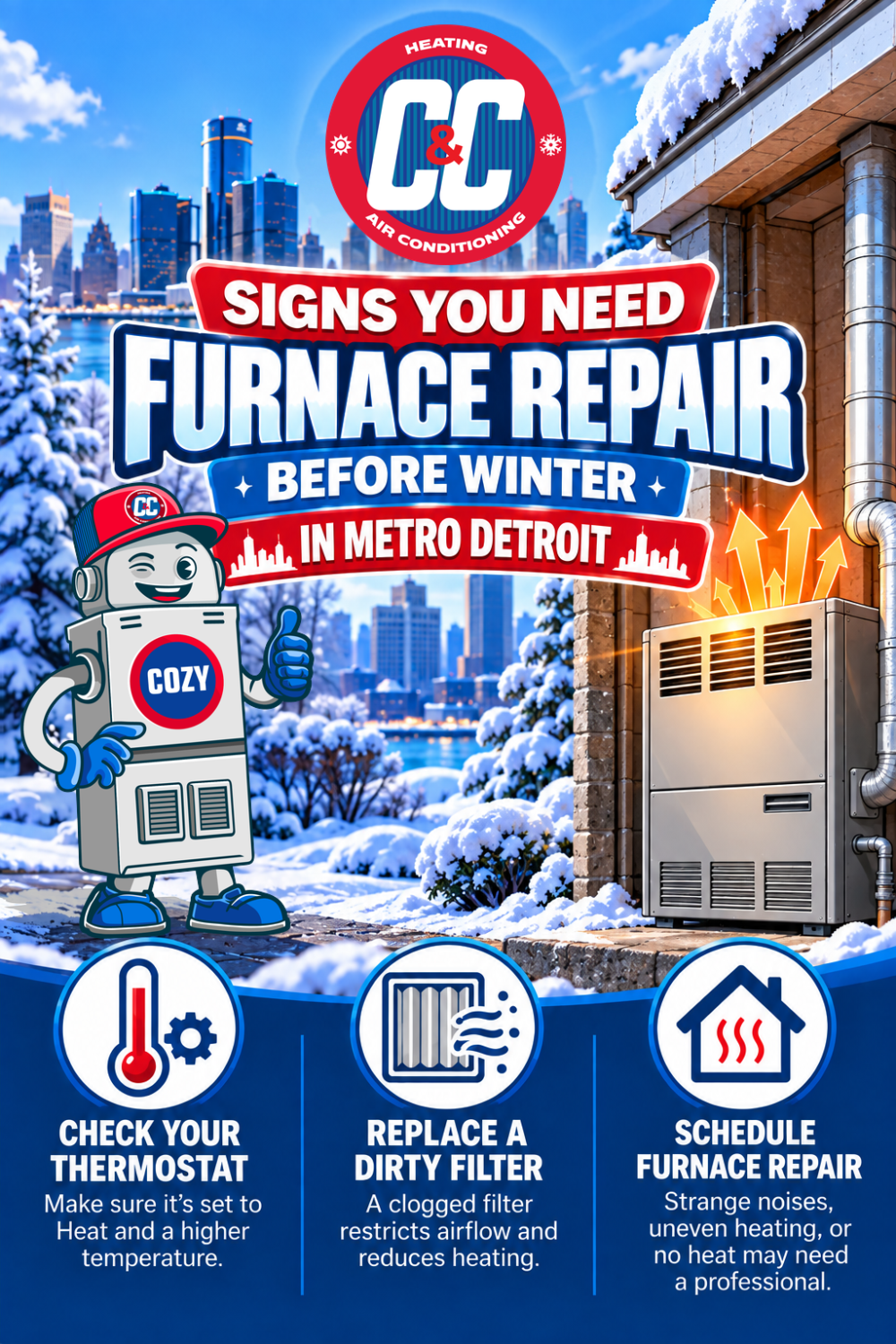
- Start by checking that your thermostat has fresh batteries and is set to the correct temperature.
- If you’ve recently experienced a power outage, check that the circuit breaker hasn’t been tripped, and reset it if it has.
- Inspect the area around your air vents to make sure it’s clear, and remove any obstructions like furniture and rugs.
- Clean and check your HVAC filters to ensure clear airflow. Clean furnace filters once a month and replace them every three months, or as recommended by the manufacturer.
When Furnace Problems Should Not Be Ignored
An annoying furnace issue can quickly become a major emergency if you leave it unfixed. While it’s always best to schedule a furnace inspection promptly if you notice something unusual, you should call for emergency furnace repairs if any of the following furnace problems arise in your home:
- Burning smells or gas odors.
- The carbon monoxide alarm is going off.
- The pilot light burns orange or yellow instead of blue.
- You’re facing a no-heat emergency.
- You hear loud and unusual noises from your furnace.
- You’re experiencing furnace short cycling or the system repeatedly tripping the breaker.
Contact C & C Heating & Air Conditioning Today to Schedule Service
Do you need home furnace repair in Detroit? Contact C & C Heating & Air Conditioning today to schedule installation, repair, or maintenance services, and ask about Energy Star rebates available to you!
Frequently Asked Questions
What does repeated clicking before a furnace starts usually indicate?
A repeatedly clicking furnace usually indicates an ignition or electrical issue. These problems require diagnosis and repair by a licensed furnace professional.
What does a furnace flame sensor do and how can I tell when it is malfunctioning?
A furnace flame sensor checks that the furnace flame is on and shuts off the gas supply if the flame goes out. Signs of a malfunctioning sensor include a visibly grey, sooty sensor, as well as issues like furnace short cycling and ignition problems.
Can snow or ice blocking furnace intake and exhaust pipes affect furnace operation?
Yes, snow or ice blocking furnace intake and exhaust pipes can prevent airflow and force toxic air back into your home. Always clear snow and ice away from outdoor pipes to ensure proper furnace operation.